



Join Extension Activities

All Events
- Highlighted Programmes
- All Events
- Hong Kong Reading Week
- Events at Hong Kong Central Library
- Summer Library Festival
- Reading Activities
- Literary Activities
- Awards / Competitions
- Talks / Workshops
- IT Activities
- Storytelling for Children
- Exhibitions
-
Hot Topics
- Storytelling for Children
- Storytelling for Children (Cantonese)
- Activities in the Chinese Culture Promotion Series
- Storytelling for Children (Cantonese)
- Talk on Chinese Classics
- Other Exhibitions
- Storytelling for Children (English)
- 4.23 World Book Day
- Other Literary Activities
- Other Talks / Workshops
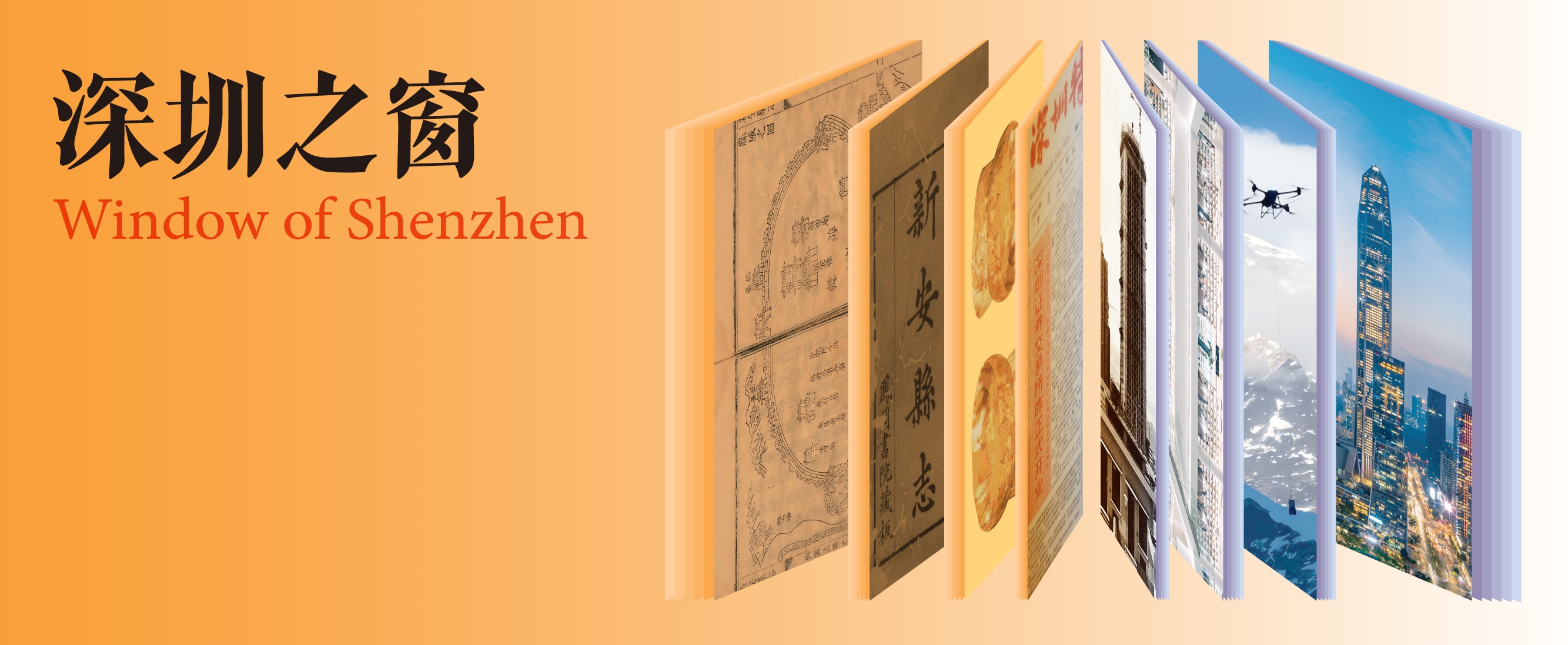
1/ Reference Book Display: Window of Shenzhen
| Date: | 2026/4/1 (Wednesday) to 2027/3/31 (Wednesday) |
| Time: | Library Opening Hours |
| Venue: | Hong Kong Central Library (9/F Reference Library) |
1/ Roving Exhibition on the Winning Entries of The 36th Chinese Poetry Writing Competition 2026
| Date: | 2027/2/1 (Monday) to 2027/2/24 (Wednesday) |
| Time: | Library Opening Hours |
| Venue: | Hong Kong Central Library (G/F) |
2/ Roving Exhibition on the Winning Entries of The 36th Chinese Poetry Writing Competition 2026
| Date: | 2026/10/1 (Thursday) to 2026/10/28 (Wednesday) |
| Time: | Library Opening Hours |
| Venue: | Hong Kong Central Library (G/F) |
1/ Looking Back at Hong Kong Industry
| Date: | 2026/9/1 (Tuesday) to 2026/12/31 (Thursday) |
| Time: | Library Opening Hours |
| Venue: | Hong Kong Central Library (8/F Rare Book Reading Room) |
| Description: | Hong Kong’s industrial development can be traced back to traditional handicraft workshops during the Song and Yuan dynasties. In the mid-19th century, Hong Kong evolved into a major trading port, giving rise to modern industries. By the mid-20th century, labour-intensive industries such as textiles and garments began to thrive in Hong Kong. The 1970s saw the emergence of industries such as toys, electronics, and watches and clocks. Together, these industries became key pillars of the local economy in the 1980s. This document display revisits our industrial development and examines its impact on popular culture, while celebrating the resilience of workers and entrepreneurs who have made significant contributions to our economy. This document display is also one of the activities in the Chinese Culture Promotion Series. The LCSD has long been promoting Chinese history and culture through organizing an array of programmes and activities to enable the public to learn more about the broad and profound Chinese culture. For more information, please visit https://ccpo.gov.hk/en/. |
1/ “Early Chinese Photography Collection of Moonchu Foundation” Roving Exhibition
| Date: | 2026/9/9 (Wednesday) to 2026/12/29 (Tuesday) |
| Time: | Library Opening Hours |
| Venue: | Hong Kong Central Library (10/F Arts Resource Centre) |
| Description: | Photographs capture transient moments. As they are duplicated, the moments are preserved, rendering history tangible through visual documentation and allowing one to visualise scenes that are long gone. The Chinese photography collection of the Moonchu Foundation held by the Hong Kong Museum of History includes more than 20,000 photographic works and related books and periodicals. The majority date from the late 19th century to the early 20th century, documenting significant historical events and military campaigns alongside urban landscapes and folk customs of the period from both macro and micro perspectives. This exhibition presents selected photographs from this collection to reveal the visage of China a century ago. |
2/ “Early Chinese Photography Collection of Moonchu Foundation” Roving Exhibition
| Date: | 2026/6/17 (Wednesday) to 2026/7/31 (Friday) |
| Time: | Library Opening Hours |
| Venue: | Hong Kong Central Library (1/F, Exhibition and Activities Area) |
| Description: | Photographs capture transient moments. As they are duplicated, the moments are preserved, rendering history tangible through visual documentation and allowing one to visualise scenes that are long gone. The Chinese photography collection of the Moonchu Foundation held by the Hong Kong Museum of History includes more than 20,000 photographic works and related books and periodicals. The majority date from the late 19th century to the early 20th century, documenting significant historical events and military campaigns alongside urban landscapes and folk customs of the period from both macro and micro perspectives. This exhibition presents selected photographs from this collection to reveal the visage of China a century ago. |
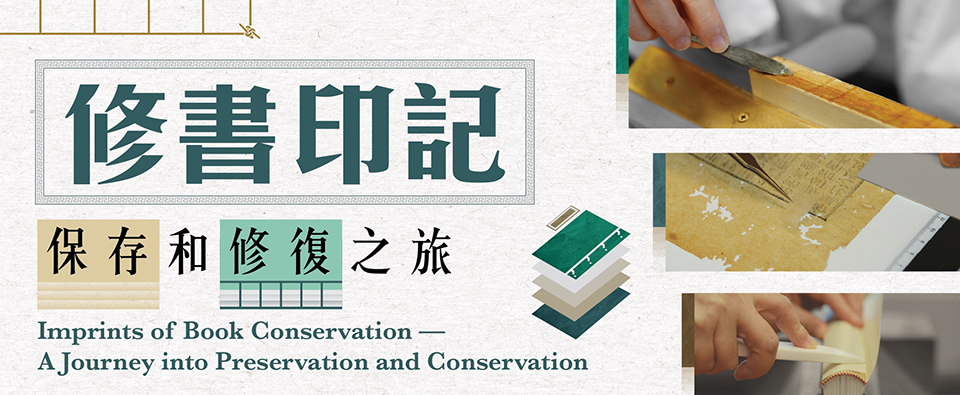
1/ Imprints of Book Conservation — A Journey into Preservation and Conservation
| Date: | 2026/9/2 (Wednesday) to 2026/12/29 (Tuesday) |
| Time: | Library Opening Hours |
| Venue: | Hong Kong Central Library (8/F Cultural and Historical Resources Corner) |
1/ Monthly Literary Talk 2026 : Adaptation and Interpretation of Hong Kong Literature: (1) Tête-bêche: The Theatrical Rebirth of Liu Yichang’s Intersection; (2) Emotional Currents: Film and Stage Adaptations of Spring in a Small Town
| Date & Time: | 19 December 2026 (Saturday) 2:30 p.m. - 4:30 p.m. |
| Venue: | Hong Kong Central Library (Lecture Theatre, G/F) |
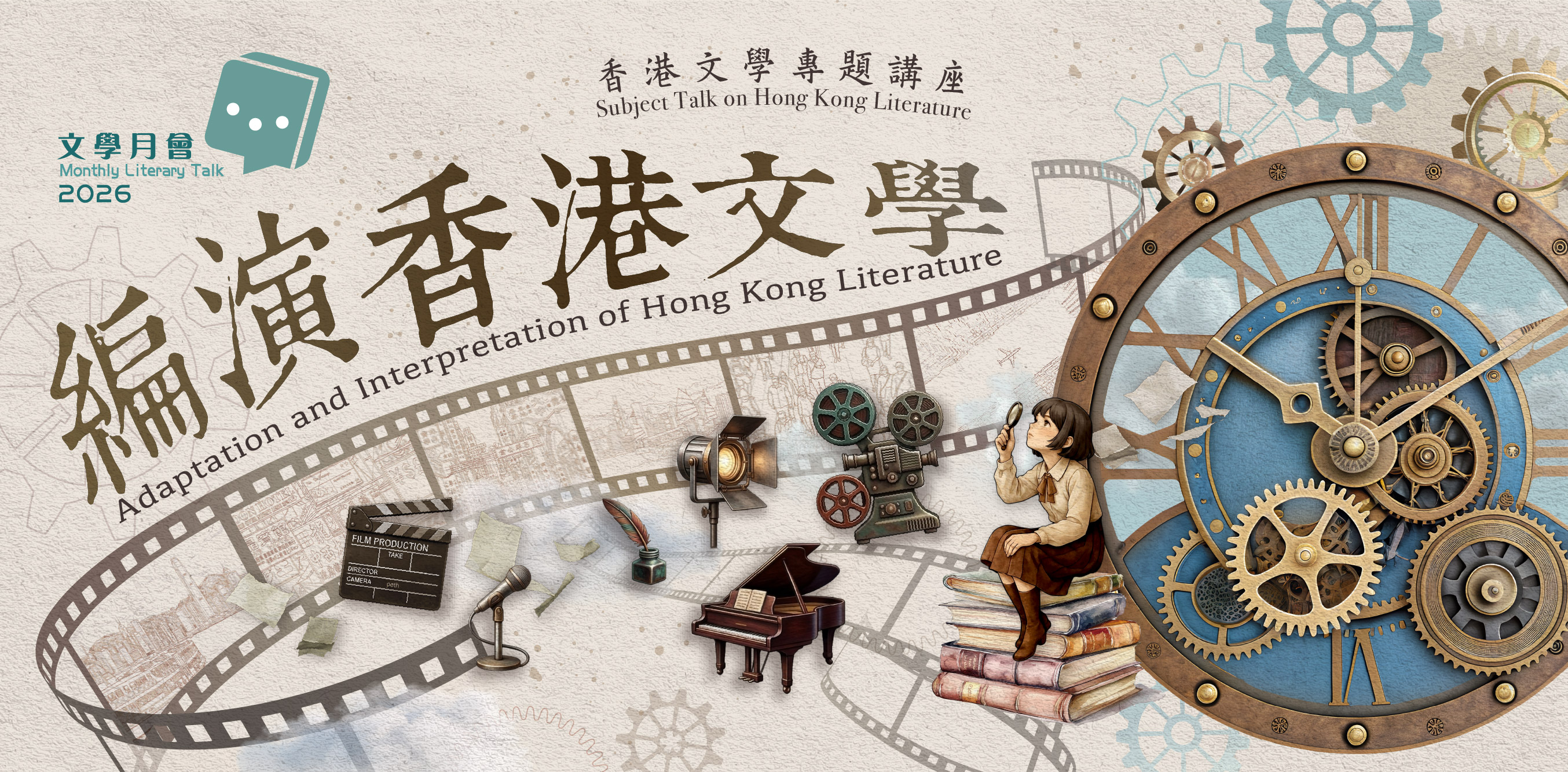
2/ Monthly Literary Talk 2026 : Adaptation and Interpretation of Hong Kong Literature: (1) Eileen Chang on Stage; (2) Hong Kong Cinema and Autumn Sorrow on a Journey
| Date & Time: | 21 November 2026 (Saturday) 2:30 p.m. - 4:30 p.m. |
| Venue: | Hong Kong Central Library (Lecture Theatre, G/F) |
3/ Monthly Literary Talk 2026 : Adaptation and Interpretation of Hong Kong Literature: (1) Chen Di Yi the Lyricist and the Shanghai Style Pop Music; (2) Feng Zikai In Hong Kong : From Ming Chuan Feng Zikai Man Hua Xuan Yi to Prospects Theatre Feng Zikai
| Date & Time: | 24 October 2026 (Saturday) 2:30 p.m. - 4:30 p.m. |
| Venue: | Hong Kong Central Library (Lecture Theatre, G/F) |
4/ Monthly Literary Talk 2026 : The Past and Future of Science Fiction Literature: Mythical Creatures, Animals, Machines, and Artificial Intelligence - Science Fiction Literature: Its Values and Horizons
| Date & Time: | 13 June 2026 (Saturday) 2:30 p.m. - 4:30 p.m. |
| Venue: | Hong Kong Central Library (Lecture Theatre, G/F) |
5/ Monthly Literary Talk 2026 : The Past and Future of Science Fiction Literature: Mythical Creatures, Animals, Machines, and Artificial Intelligence - Artificial Intelligence and Dimensions of Science Fiction
| Date & Time: | 9 May 2026 (Saturday) 2:30 p.m. - 4:30 p.m. |
| Venue: | Hong Kong Central Library (Lecture Theatre, G/F) |
6/ Monthly Literary Talk 2026 : The Past and Future of Science Fiction Literature: Mythical Creatures, Animals, Machines, and Artificial Intelligence - Empathy and Imagination Between Humans and Animals
| Date & Time: | 11 April 2026 (Saturday) 2:30 p.m. - 4:30 p.m. |
| Venue: | Hong Kong Central Library (Lecture Theatre, G/F) |
7/ Monthly Literary Talk 2026 : Enjoy the Moment with Jin Yong's Martial Arts Novels - Integrity and Poetry
| Date & Time: | 14 March 2026 (Saturday) 2:30 p.m. - 4:30 p.m. |
| Venue: | Hong Kong Central Library (Lecture Theatre, G/F) |
| Description: | The talks are also one of the activities in the Chinese Culture Promotion Series. The LCSD has long been promoting Chinese history and culture through organising an array of programmes and activities to enable the public to learn more about the broad and profound Chinese culture. For more information, please visit https://ccpo.gov.hk/en. |
8/ Monthly Literary Talk 2026 : Enjoy the Moment with Jin Yong's Martial Arts Novels - Touch and Taste
| Date & Time: | 14 February 2026 (Saturday) 2:30 p.m. - 4:30 p.m. |
| Venue: | Hong Kong Central Library (Lecture Theatre, G/F) |
| Description: | The talks are also one of the activities in the Chinese Culture Promotion Series. The LCSD has long been promoting Chinese history and culture through organising an array of programmes and activities to enable the public to learn more about the broad and profound Chinese culture. For more information, please visit https://ccpo.gov.hk/en. |
9/ Monthly Literary Talk 2026 : Enjoy the Moment with Jin Yong's Martial Arts Novels - Innovation and Transformation
| Date & Time: | 10 January 2026 (Saturday) 2:30 p.m. - 4:30 p.m. |
| Venue: | Hong Kong Central Library (Lecture Theatre, G/F) |
| Description: | The talks are also one of the activities in the Chinese Culture Promotion Series. The LCSD has long been promoting Chinese history and culture through organising an array of programmes and activities to enable the public to learn more about the broad and profound Chinese culture. For more information, please visit https://ccpo.gov.hk/en. |
1/ Subject Talk on "New Era of IT" – AI+ and New Trends in Industrial Transformation
| Date: | 2026/12/12 (Saturday) |
| Time: | 2:30 p.m. to 4:00 p.m. |
| Venue: | Hong Kong Central Library (Activity Room 1) |
| Description: | In today’s society, artificial intelligence (AI) technology is being actively integrated into various industries, reshaping industrial structures and operating models through a dual-track approach of “industries for AI” and “AI for industries”. This seminar shares innovative AI+ practices from Hong Kong and Chinese Mainland across sectors such as retail, catering, housing construction, healthcare, transportation, and finance. It also explores privacy, employment, and safety issues of concern to the public, helping the audience embrace the convenience brought by emerging technologies. |
2/ Subject Talk on "New Era of IT" – What is RMB Digital Currency?
| Date: | 2026/9/12 (Saturday) |
| Time: | 2:30 p.m. to 4:00 p.m. |
| Venue: | Hong Kong Central Library (Activity Room 1) |
| Description: | Since the introduction of Digital RMB in 2019, it was widely tested major’s cities in Chinese Mainland from 2021 till now. When Chinese Mainland is so popular in using AliPay and WeChatPay, why the government debut Digital RMB? What are the features of Digital RMB and how can we benefit from this new currency? The speaker will share his experience during this session. |
3/ Subject Talk on "New Era of IT" – Reshaping Personal Roles in the Age of AI
| Date: | 2026/6/13 (Saturday) |
| Time: | 2:30 p.m. to 4:00 p.m. |
| Venue: | Hong Kong Central Library (Activity Room 1) |
| Description: | As artificial intelligence rapidly integrates into our daily lives, this seminar invites participants to explore and exchange ideas on how AI is influencing personal roles and positioning across education, business, society, and government. Together, we will reflect on how individuals of all ages can continue to grow and innovate amidst these changes. Content Overview Divided into two parts: Trends and Cases: The first half will introduce local and global trends in AI development alongside real-world case studies. Interactive Dialogue: The second half features an interactive discussion session, allowing participants to share their own experiences and perspectives. This segment aims to alleviate misunderstandings and anxiety while identifying positive strategies for navigating the AI era. |
4/ Subject Talk on "New Era of IT" - Cryptocurrency: Will It Go to Zero?
| Date: | 2026/3/14 (Saturday) |
| Time: | 2:30 p.m. to 4:00 p.m. |
| Venue: | Hong Kong Central Library (Activity Room 1) |
| Description: | Bitcoin, altcoins — you name it, wild ups and downs are part of the game. Every time prices crash by half (or even more), someone shouts: “This time it’s going to zero!” But is that really the end of the story? Not all coins share the same fate, and in this talk the speaker will cut through the noise and give you a straight answer. |
1/ Chinese Culture and our Intangible Culinary Heritage: Hong Kong-style Milk Tea, Pineapple Bun, and Egg Tart
| Date: | 2026/12/5 (Saturday) |
| Time: | 2:30 p.m. to 4:30 p.m. |
| Venue: | Hong Kong Central Library (Lecture Theatre, G/F) |
| Description: | A considerable portion of Hong Kong’s intangible cultural heritage is closely related to food and drink. In particular, the everyday Chinese-style tea restaurants, better known as cha chaan teng, have earned a special place in the city’s heritage. The making techniques of Hong Kong-style milk tea, pineapple buns and egg tarts have been included in the Intangible Cultural Heritage Inventory of Hong Kong, underscoring their precious historical and cultural value. The rich aroma of Hong Kong-style milk tea speaks of generations of refined tea-making skills, while its silky smoothness tells the story of the dedicated masters who have perfected it. The pineapple bun, a creative product of cultural fusion, carries a history of changing names and evolving identity. Meanwhile, egg tarts have long offered a choice between flaky puff pastry and crisp “cookie” pastry, accommodating different tastes and connecting deeply to our daily life. Together, the intangible culinary heritage of cha chaan teng weaves an intriguing story of Hong Kong, one that lingers on with a lasting aftertaste. |
2/ Decoding Gangcai: Appreciating a Century of Painted Porcelain in Hong Kong
| Date: | 2026/9/13 (Sunday) |
| Time: | 2:30 p.m. to 4:30 p.m. |
| Venue: | Hong Kong Central Library (Lecture Theatre, G/F) |
| Description: | The technique of making painted porcelain by applying overglaze decoration to white porcelain before firing is known as jiacai in the industry. During the 20th century, jiacai was a booming industry in Hong Kong. With a history spanning nearly a century, painted porcelain produced in Hong Kong, also known as Gangcai, is mainly made for export. Not only has Gangcai been influenced by painted porcelain making techniques from Guangdong, but it also represents a fusion of Hong Kong’s local culture with traditional Chinese culture and the cultures of various export markets. Drawing on oral history records, the speaker will share the development, distinct characteristics and technical highlights of Gangcai. |
3/ Recollections of Nanyin and Yue'ou in Hong Kong
| Date: | 2026/7/19 (Sunday) |
| Time: | 2:30 p.m. to 4:30 p.m. |
| Venue: | Hong Kong Central Library (Lecture Theatre, G/F) |
| Description: | “Today, we are far apart, and meeting has become difficult; thus I drift alone under the cool evening sky on a silent boat.” These lines, from the classic Cantonese Nanyin “A Wanderer’s Autumn Grief”, are performed time and again by actors appearing in Hong Kong films. Whenever the tunes pop up, they stir a collective memory of Nanyin among Hong Kong people. From the movie “Rouge” more than thirty years ago to the more recent “The Last Dance”, the haunting melody of Nanyin seems like a secret code that always quietly plays on the heartstrings of the Cantonese community. This enduring resonance is no coincidence, probably because Nanyin has been performed by gushi (blind male singers) and Cantonese opera singers in Hong Kong for generations. In contrast, another form of narrative singing Yue’ou, which was presented in the Cantonese vernacular by shiniang (blind female artists) in Hong Kong half a century ago, has been almost completely forgotten. Both Nanyin and Yue’ou belong to the same tradition of narrative song art, with the former being remembered while the latter slipping into oblivion. Remembrance and forgetting are two sides of the same coin. When we speak of “Hong Kong memories”, one may ask, “What exactly have we forgotten?” |
1/ What is in a Name: Chinese Culture Through the Lens of Names
| Date & Time: | 2026/12/05 (Saturday) 11:00 a.m. – 12:30 p.m. |
| Venue: | Hong Kong Central Library (Lecture Theatre, G/F) |
2/ Resilience of the Soul: Chinese Culture and Life Values
| Date & Time: | 2026/11/07 (Saturday) 02:30 p.m. – 04:00 p.m. |
| Venue: | Hong Kong Central Library (Lecture Theatre, G/F) |
3/ The Joy of Fish: The Writing on Fish in Taiping Yulan
| Date & Time: | 2026/10/03 (Saturday) 11:00 a.m. – 12:30 p.m. |
| Venue: | Hong Kong Central Library (Lecture Theatre, G/F) |
4/ Survival Skills and Anti-Scam Guide for Ancient Heroes
| Date & Time: | 2026/09/05 (Saturday) 11:00 a.m. – 12:30 p.m. |
| Venue: | Hong Kong Central Library (Lecture Theatre, G/F) |
5/ The Poetic Artistry of Li Bai
| Date & Time: | 2026/08/01 (Saturday) 11:00 a.m. – 12:30 p.m. |
| Venue: | Hong Kong Central Library (Lecture Theatre, G/F) |
6/ What is "Li" (Ritual)?
| Date & Time: | 2026/07/04 (Saturday) 11:00 a.m. – 12:30 p.m. |
| Venue: | Hong Kong Central Library (Lecture Theatre, G/F) |
7/ Empress Wu Zetian's Governance, Religious Beliefs, and Ideology of Loyal Ministers
| Date & Time: | 2026/06/06 (Saturday) 11:00 a.m. – 12:30 p.m. |
| Venue: | Hong Kong Central Library (Lecture Theatre, G/F) |
8/ Truth within the Strange: Morality and Meaning in Classical Chinese Fantasy Tales
| Date & Time: | 2026/05/02 (Saturday) 11:00 a.m. – 12:30 p.m. |
| Venue: | Hong Kong Central Library (Lecture Theatre, G/F) |
9/ Confucian Concept of “Ren” (humanity) and Its Implications for Modern Interpersonal Relationships
| Date & Time: | 2026/03/14 (Saturday) 11:00 a.m. - 12:30 p.m. |
| Venue: | Hong Kong Central Library (Lecture Theatre, G/F) |
10/ Violent and Nonviolent Language: Exploring Communication Wisdom from Pre-Qin Philosophers (Talk Rescheduled)
| Date & Time: | Talk Rescheduled to: 2026/03/07 (Saturday) 11:00 a.m. - 12:30 p.m. |
| Venue: | Hong Kong Central Library (Lecture Theatre, G/F) |
11/ My Days in a Miao Village
| Date & Time: | 2026/02/07 (Saturday) 2:30 p.m. - 4:00 p.m. |
| Venue: | Hong Kong Central Library (Lecture Theatre, G/F) |
12/ Calligraphy and Public Art: Past, Present, and Future
| Date & Time: | 2026/01/17 (Saturday) 2:30 p.m. - 4:00 p.m. |
| Venue: | Hong Kong Central Library (Lecture Theatre, G/F) |
1/ Book Display: Witnessing Prosperity through Reading: A 29-Year Retrospective of HKSAR’s Remarkable Achievements
| Date: | 2026/8/1 (Saturday) to 2026/11/30 (Monday) |
| Time: | Library Opening Hours |
| Venue: | Hong Kong Central Library (8/F Reference Library: Cultural and Historical Resources Corner) |